


















































Controlling bean weevils: Natural and eco-friendly strategies for your garden
If you suddenly discover small holes in your beans or your stored legumes are “dusty,” a bean weevil (often described as a bean or seed/pantry pest) is often the culprit. The good news is: with a clear routine of inspection, hygiene, and natural helpers, you can usually keep an infestation well under control – without the need for unnecessary chemicals.
In this guide, you will learn how to identify bean weevils, why they appear, which natural measures really work, and how to prevent them in the future. For monitoring and targeted containment, you can, for example, use a beetle trap with a special pheromone lure – useful if you want to keep an eye on the infestation pressure.
🐞 Tip: Bean weevils often multiply in pantries unnoticed. The sooner you sort out infested beans and consistently clean storage areas, the faster the cycle will stop.
Causes: Where do bean weevils come from?
Bean weevils usually enter the house via infested legumes – e.g., through dried beans, seeds, mixed packs, or pantry items bought from stores. Factors that particularly encourage them include: warmer storage rooms, long storage periods, and lack of inspection. The beetles or their developmental stages are often located directly inside the grain – which is why an infestation is sometimes only noticed late.
Typical risk factors
- Unchecked pantry items (beans, lentils, chickpeas) kept for long periods
- Warm, dry storage (pantry, kitchen, utility room)
- Open packaging or leaky containers
- Acquired pantry items/seeds without a "quarantine" period
Identification: How do you spot a bean weevil infestation?
To identify bean weevils, it is worth taking a closer look at your supplies. Depending on the species, typical signs appear on the grain and in the surrounding area.
- Round exit holes in beans/seeds (look like they have been "drilled")
- Fine dust or crumbs in the bag/container
- Small beetles crawling around near stored goods
- Beans that are stuck together or "light" (hollowed out inside)
If you are unsure whether it is really bean weevils, monitoring helps: A beetle trap with a special pheromone lure can help make activity visible – especially if you want to check multiple storage areas.
Control: Natural & eco-friendly measures
When controlling bean weevils, the goal is clear: remove infested supplies, stop developmental stages, and keep the environment clean so that no new generation can follow. Proceed step-by-step to achieve the fastest results.
1) Consistently sort out infested supplies
- Check all beans/legumes: open bags, use a sieve test, visual inspection
- Dispose of heavily infested supplies in sealed packaging (residual waste, not open in the kitchen)
- Place questionable packages separately ("quarantine") until an infestation can be ruled out
2) Clean storage areas thoroughly
- Empty cupboards completely, vacuum corners/joints (including drill holes/shelf supports)
- Wipe down with warm water + mild cleaner, let dry well
- Dispose of vacuum cleaner bags immediately afterwards to prevent re-infestation
3) Monitoring & lowering infestation pressure
After cleaning, it makes sense to keep an eye on activity. For this, you can place a beetle trap with a special pheromone lure at specific points – e.g., in the pantry or near suspected storage areas. This allows you to see more quickly if beetles are still active.
4) Beneficial insects as biological support
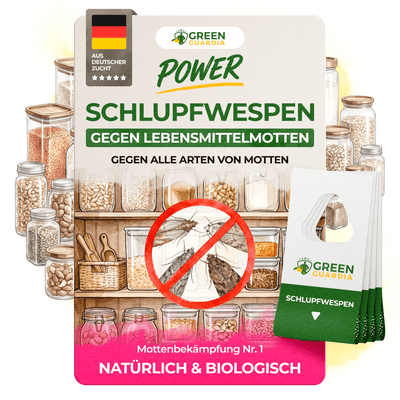
In certain pantry/storage situations, beneficial insects can also help interrupt the cycle. Lariophagus wasps are tiny, helpful adversaries that can be used for pantry pest prophylaxis or as a support measure. This is particularly useful if you have recurring problems in pantries or storage rooms and want to work sustainably.
✅ Remember: The combination of consistent hygiene, monitoring (e.g., with a trap), and – if appropriate – biological support yields the most stable results in practice.
Prevention: How to avoid bean weevils permanently
To ensure bean weevils do not become a constant issue, a clear pantry routine is worth the effort. Especially with beans & co., "early inspection" is the best protection.
- Store supplies airtight (jars, tins, tightly sealing containers)
- Inspect new items and store separately at first if necessary
- FIFO principle: Use older supplies first, no "long-term storage" without inspection
- Regular visual inspection (every 2–4 weeks) – especially in warm months
- For sensitive areas: occasional monitoring with a beetle trap with a special pheromone lure for early detection
Source note: For general recommendations on stock protection and hygiene, information from the Federal Environment Agency (Umweltbundesamt) and consumer portals/institutes covering household and storage topics is helpful.
Bean Weevil FAQ
How can I identify bean weevils in my pantry?
Typical signs include round exit holes in beans or seeds, fine dust in the packaging, and small beetles near the storage area. If you want to confirm activity, a beetle trap with special attractant can help with monitoring.
Do I have to throw away all my supplies if I find bean weevils?
Not necessarily – but heavily infested packages should be disposed of immediately. Check all legumes and store questionable items separately until you are sure. It is also important to thoroughly clean the cupboards to ensure no developmental stages are left behind.
How can I get rid of bean weevils naturally?
The most effective natural method is a combination of sorting out, thorough cleaning, and airtight storage. Additionally, monitoring measures (traps) and – depending on the situation – storage wasps (Lariophagus distinguendus) can be useful as biological support.
What is the best way to prevent a new infestation?
Store beans and legumes airtight, check new items separately before storing, and use the FIFO principle. In warmer months, regular visual inspections are worth the effort – optionally supplemented by a beetle trap with special attractant for early detection.
Take action now:
Check your bean supplies for holes and dust today, clean the storage area thoroughly, and switch to airtight storage in the future. If you have recurring problems, combine monitoring with a beetle trap with special attractant and – depending on the storage/supply situation – biological support through storage wasps. Further practical tips can also be found in our Green Guardia Guide.