





































































Protecting against flour beetles: Natural methods for prevention and control
Flour beetles are typical stored product pests and can quickly become a problem in kitchens, pantries, storage rooms, or food-handling businesses. An infestation often goes unnoticed for a long time – until beetles appear in cupboards, on windowsills, or in packaging. The good news: with a clear hygiene and monitoring concept, flour beetles can be sustainably reduced – without unnecessary burden on your home or business.
Causes: Where do flour beetles come from?
Flour beetles often enter a home or business through purchased goods or supply chains. Dry supplies that are stored for a long time or kept open/unsealed are particularly vulnerable. Warmth and undisturbed areas (e.g., behind shelves, in crevices, or in stacked cardboard) promote their development.
- Imported or long-term stored dry goods (e.g., rice, flour, semolina, muesli)
- Unsealed packaging or open containers in the pantry
- Cardboard & bagged goods in storage (hiding in cracks and gaps)
- Heat sources (near radiators, machinery areas, sunny storage rooms)
Detection: How do you spot a flour beetle infestation?
A reliable indicator is not just the beetle itself, but primarily the overall state of the storage or pantry area. Early detection saves a lot of effort later. Specifically check the "hotspots": edge zones, shelves, older packages, and dust bunnies.
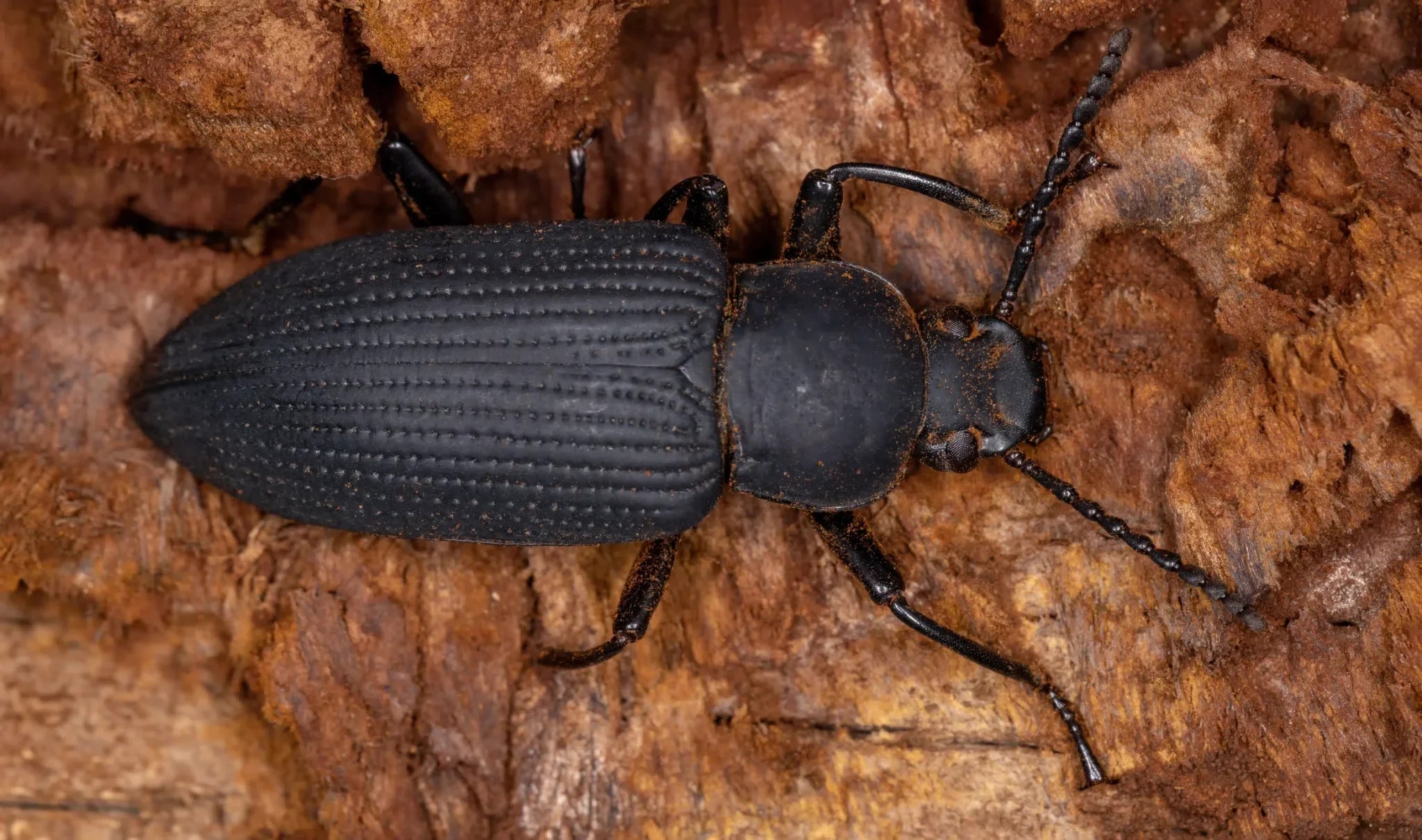
- Small, brownish beetles in cupboards, on walls, or on windowsills
- Activity in dry products (crumb dust, particles, contamination)
- Larvae/remains in corners, crevices, or behind packaging
- Recurring findings despite "normal" cleaning (sign of hidden breeding grounds)
Combating flour beetles: Effective, natural measures
If you want to combat flour beetles, the combination of immediate measures and prevention is crucial. Simply "wiping away" is rarely enough – as eggs, larvae, or beetles often hide in crevices, folds in packaging, and dust bunnies.
1) Immediate measures: Remove infestation sources & separate thoroughly
- Sort out suspicious supplies: check open/older packages consistently and dispose of them separately
- Empty cupboards and shelves completely: also check cracks, hinges, and drill holes
- Vacuum thoroughly: edges, crevices, baseboards, appliance areas – dispose of the vacuum bag afterward
- Wipe cleaning: use hot water; let dry well afterward
2) Optimize storage: Eliminate the beetles' foundation
- Seal tightly: store dry goods in boxes/jars with airtight lids
- FIFO principle: "First in, first out" – use older stock first
- Reduce cardboard: do not store external packaging permanently in the pantry or storage area
- Deactivate hotspots: regularly remove dust bunnies under shelves, behind appliances, and along baseboards
3) Biological support: Targeted use of beneficial insects
Biological help can be useful, especially in storage rooms or in cases of recurring findings. Beneficial insects that reduce typical development stages of stored product pests in hard-to-reach areas are suitable for targeted, natural control.
A proven solution as part of a sustainable hygiene concept is Lariophagus wasps. They help you lower the infestation pressure in storage and pantry areas – especially where you suspect breeding grounds that are not immediately visible.
Tip: Always plan a "monitoring phase" after control measures: check consistently for 2–4 weeks, re-clean, and optimize storage – this prevents remaining populations from "coming back up."
Prevention: How to protect supplies and storage permanently
Prevention is the most effective lever against flour beetles. If you structure your storage, cleaning, and checks well, you significantly reduce the risk – whether in a private home, catering, or food business.
- Regular pantry checks (especially for flour, rice, grain products)
- Airtight containers instead of open packages or loose bagged goods
- Edge zone cleaning as a routine (under shelves, baseboards, appliance areas)
- Check incoming goods: sort out damaged packages, do not "co-store" cardboard boxes
- Store in dry and well-ventilated conditions: heat and moisture promote development
Frequently asked questions about flour beetles
Which foods are particularly affected?
Commonly affected items are rice, flour, semolina, rolled oats, muesli, and other dry supplies. Critical items are primarily open or long-stored packages as well as products stored in warm areas or in stacked cardboard.
How long does it take to get rid of flour beetles?
That depends on whether you catch all breeding sites. With consistent sorting out, thorough hotspot cleaning, and optimized storage, many households see a significant improvement within 1–3 weeks. In warehouses, a monitoring phase of several weeks can be useful to safely intercept remaining populations.
Why do flour beetles return despite cleaning?
Usually, a source remains: unsealed packaging, a dust bunny in a crevice, cardboard with residue, or an undiscovered hotspot behind shelves/appliances. That is why storage and edge-zone cleaning are just as important as general cleaning.
When are beneficial insects like Lariophagus wasps useful?
If you have recurring findings, suspect hard-to-reach areas, or work in storage environments where you want to proceed as gently as possible, using Lariophagus wasps can be a useful addition to the overall concept.
Conclusion: Combating flour beetles is best achieved with a system: remove the infestation source, clean hotspots, store supplies airtight, and monitor them long-term. This protects your food for the long run – naturally and sustainably.
Would you like to reliably reduce flour beetles and permanently protect your storage or pantry? Start with consistent hotspot cleaning and optimize your storage. For biological support as part of your overall concept, Lariophagus wasps can be a suitable solution.