


































































Effective pest control in historic buildings and listed properties
Historic buildings and listed properties have their own unique character—but also specific risks. Cracks, wooden beams, old insulation, textiles, attics, or rarely used rooms create ideal conditions for certain pests. At the same time, many conventional treatments are unsuitable because they damage surfaces, leave behind odors, or are subject to restrictions. In this guide, you will learn how to detect pest infestations early, take material-friendly action, and protect your home long-term with sustainable solutions.
Causes: Why are pest problems more common in old buildings?
In older properties, three factors often come together: plenty of hiding spots, organic materials, and fluctuating climate conditions. Especially in attics, basements, subfloors, and behind wall paneling, microclimates develop that favor pests—often without being noticed immediately.
- Building structure with joints, cavities, floorboards, moldings, and beams
- Textiles & natural materials (wool, felt, carpets, curtains)
- Dust & organic debris in hard-to-reach areas
- Humidity fluctuations due to irregular heating/ventilation
Detection: Typical signs of pest infestation in listed buildings
Since historic buildings often have many “quiet” zones, a structured inspection is crucial: Which rooms are rarely used? Where are textiles stored? Are there any dark corners with dust and little air circulation? These are exactly the places where infestations occur most frequently.
- Feeding holes in textiles, carpet edges, or upholstery
- Larval skins, webbing, or small cocoons in corners
- Molting remains and fine crumbs/dust accumulation in joints
- Beetle sightings near windows, in attics, or in storage rooms
Control: Material-friendly measures for historic buildings
When controlling pests in older buildings, the rule is: reduce the causes first, then act in a targeted manner. This allows you to avoid unnecessary intervention in the building structure and protect delicate materials. Solutions that are residue-free and precise have proven to be particularly effective.
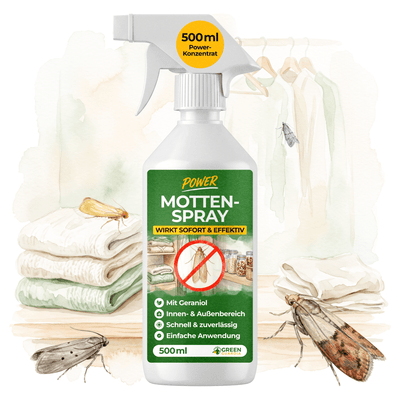
Targeted reduction of clothes moths in old buildings
Clothes moths frequently appear in historic homes where wool, felt, carpets, or old textiles are stored—such as in chests, wardrobes, attic rooms, or guest rooms. A particularly gentle solution involves the use of beneficial insects that specialize in moth eggs.
For a targeted, discreet, and material-friendly measure, parasitic wasps against clothes moths are suitable—ideal for rooms containing textiles, collections, or delicate furnishings.
Monitoring larder beetles and identifying infestation hotspots
Larder beetles and related material pests are often only noticed late because larvae hide in cracks, floorboard joints, cavities, or behind paneling. Monitoring is especially important here: you want to know where the problem is developing—not just that it exists.
To control and localize risk zones, larder beetle traps with special attractant are ideal—useful in the attic, storage rooms, near wardrobes, or at transitions between different zones in the old building.
Prevention: Sustainable protection without disturbing the building structure
In listed properties, in particular, prevention is the most effective tool. With a few simple but consistent routines, you can significantly reduce the risk—without chemicals, strong odors, or putting stress on the structure.
- Regular ventilation (shock airing) and keeping an eye on humidity levels
- Storing textiles protected (clean, dry, and tightly sealed)
- Cleaning dust & corners consistently, especially behind furniture and in joints
- Monitoring hotspots: attics, basements, wardrobes, and chests
- Check new items (second-hand textiles, carpets, decor) before storing them
Practical tip: Create a small “hotspot list” for your building (attic, chest, storage room, carpet area) and check these areas every 4–8 weeks. This will help you detect changes before damage occurs.
Frequently asked questions about pest control in historic buildings
Why do clothes moths appear so frequently in old buildings?
Older buildings offer many quiet, warm, and sheltered areas—exactly where textiles and natural materials are often stored. If these areas are rarely ventilated or cleaned, the risk increases significantly.
Do I need to be extra cautious with listed buildings?
Yes. Many surfaces, woods, plasters, and textiles are delicate. Material-friendly, low-residue solutions, and consistent prevention are therefore usually the best approach.
How does monitoring help with larder beetles?
Monitoring shows you where activity is taking place. This allows you to focus cleaning and preventative measures on specific hotspots rather than acting “on suspicion” throughout the entire building.
How quickly will I see results?
This depends on the extent of the infestation and the areas involved. Often, the first improvements become visible after a few weeks if hotspots are consistently cleaned, textiles are stored properly, and appropriate measures are applied.
Conclusion: In historic buildings, pest protection is primarily a combination of early detection, material-friendly measures, and consistent prevention. By knowing your hotspots and taking targeted action, you protect the structure, furnishings, and textiles in the long term—without unnecessary intervention.
Take action now: Start monitoring your risk zones and opt for gentle solutions—e.g., parasitic wasps against clothes moths and larder beetle traps with special attractant to detect infestations early and protect your rooms sustainably.