




























Combating the Codling Moth: Natural Methods for a Healthy Harvest
The codling moth (Cydia pomonella) is one of the most common pests on apple trees – and it is often the reason why you suddenly see wormholes in apples, brown burrowing tunnels, or fruit falling prematurely. The good news: If you want to combat the codling moth, you can also do it with natural methods – especially if you start early and stay consistent.
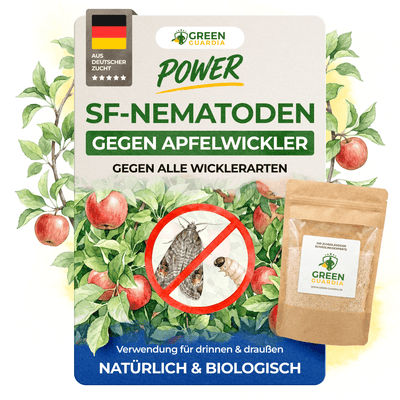
Two proven elements in an eco-friendly garden are: Trichogramma wasps against codling moths (specifically targeting eggs) and SF nematodes against codling moths (supporting against larval stages, especially where larvae hide or hibernate). Used together correctly, these beneficial organisms help reduce infestation pressure – without unnecessarily straining the garden ecosystem.
🐛 Tip: With the codling moth, timing is everything. Start early during the flight period and combine measures over several weeks – this will yield significantly better results than a one-time effort.
Causes: Where do codling moths come from?
Codling moths are night-flying moths. The actual damage is caused by their larvae ("apple maggots"). After mating, the female lays eggs on leaves or directly on small fruit. After hatching, the larvae bore into the apple, eat their way towards the core, and leave behind burrowing tunnels as well as debris (frass) at the entry hole.
Why infestation frequently returns to home gardens
- Larvae hibernate well-protected in bark crevices, on the trunk, or in the soil area
- Fallen fruit is left behind and serves as a "breeding ground"
- Incorrect timing: Measures start too late, when larvae are already inside the fruit
- Warm weather can favor multiple generations per season
Identification: Typical signs of codling moth infestation
Many people only notice the infestation during harvest. However, with a few targeted inspections, you can identify the codling moth much earlier. Pay particular attention to the fruit in the middle of the canopy and to fallen fruit.
- Small entry holes on apples, often with brownish debris (frass)
- Fruit falling prematurely or ripening unevenly
- Inside: Burrowing tunnel towards the core, often with dark excrement
- Caterpillars/larvae in the apple (typically cream-colored to pinkish)
Combat: Proven natural methods
The best strategy is a mix of hygiene, mechanical reduction, and targeted use of beneficial organisms. This is how you "interrupt" the cycle and sustainably reduce infestation pressure.
1) Immediate measures in the garden
- Consistently remove fallen fruit (do not leave it lying around) – best done regularly
- Check fruit and sort out visibly infested apples
- Check trunk & bark (bark crevices as hiding spots), especially in late summer/autumn
- Garden hygiene: Only compost if infested fruit safely decomposes through "hot" composting
2) Trichogramma wasps: Targeted reduction of the egg stage
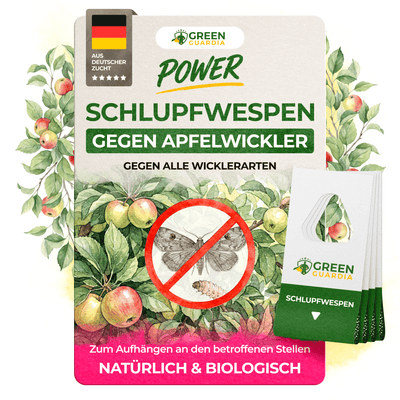
If you want to combat the codling moth naturally, the egg stage is a key lever. This is where Trichogramma wasps against codling moths provide support – they parasitize the pest's eggs and thus reduce the number of hatching larvae. Use is particularly sensible during the main flight period and in cases of recurring infestation from the previous year.
- Ideal when starting early in the season
- Helps to directly reduce the "next generation"
- Fits well into an eco-friendly orchard approach
3) SF nematodes: Supportive against larval stages
In addition, SF nematodes against codling moths can be a valuable component – especially if you want to specifically target where larvae hide or retreat for hibernation. Careful application is important (e.g., sufficient moisture, suitable temperatures, and uniform application).
✅ Practical approach: Combine Trichogramma wasps (egg phase) with SF nematodes (larval/retreat areas) – this allows you to act at two points in the life cycle.
Prevention: How to protect your apple harvest in the long term
Prevention is key with the codling moth, because it allows you to lower the population year after year. Even small routines in the garden make a big difference – especially in combination with beneficial organisms.
- Fallen fruit management (regular, consistent) – this is often the most important step
- Eco-friendly gardening: Flowering plants and retreats promote natural antagonists
- Check regularly: early visual checks starting from fruit set
- In case of recurring infestation: Seasonal planning with Trichogramma wasps and additionally SF nematodes
Source note: For generally accepted recommendations in fruit growing and integrated pest control, information from the Federal Ministry of Food and Agriculture (BMEL), from state institutions, and from reputable fruit-growing advisory services is suitable.
FAQ about the Codling Moth
How can I detect codling moth infestation early?
Check young fruit for small entry holes and brownish debris (frass) at the point of entry. Early-falling apples are also a typical warning signal. The earlier you react, the better you can reduce the infestation pressure.
What is the best natural way to help against codling moths?
The most effective approach is the combination of hygiene (removing fallen fruit) and beneficial organisms. Trichogramma wasps against codling moths target the egg stage, while SF nematodes against codling moths can be used to provide support in larval/retreat areas.
When is the best time for Trichogramma wasps?
Trichogramma wasps are particularly useful when the codling moth is active and eggs are being laid. Follow the season (early/summer depending on the region) and use them early to reduce hatching larvae.
Why is it so important to remove fallen fruit?
Larvae continue to develop in infested fruit. If fallen fruit is left lying, it can increase the infestation in the same year and worsen the starting point for the next season. Regular collection is therefore one of the most effective, natural measures.
Get active now:
Start with a quick check of your trees: shoot and fruit inspection, remove fallen fruit, and act early. For a natural approach in the orchard, we recommend Trichogramma wasps against codling moths as a seasonal component and – additionally – SF nematodes against codling moths. This increases the chance of a healthy, worm-free harvest and reduces infestation pressure in the long term.