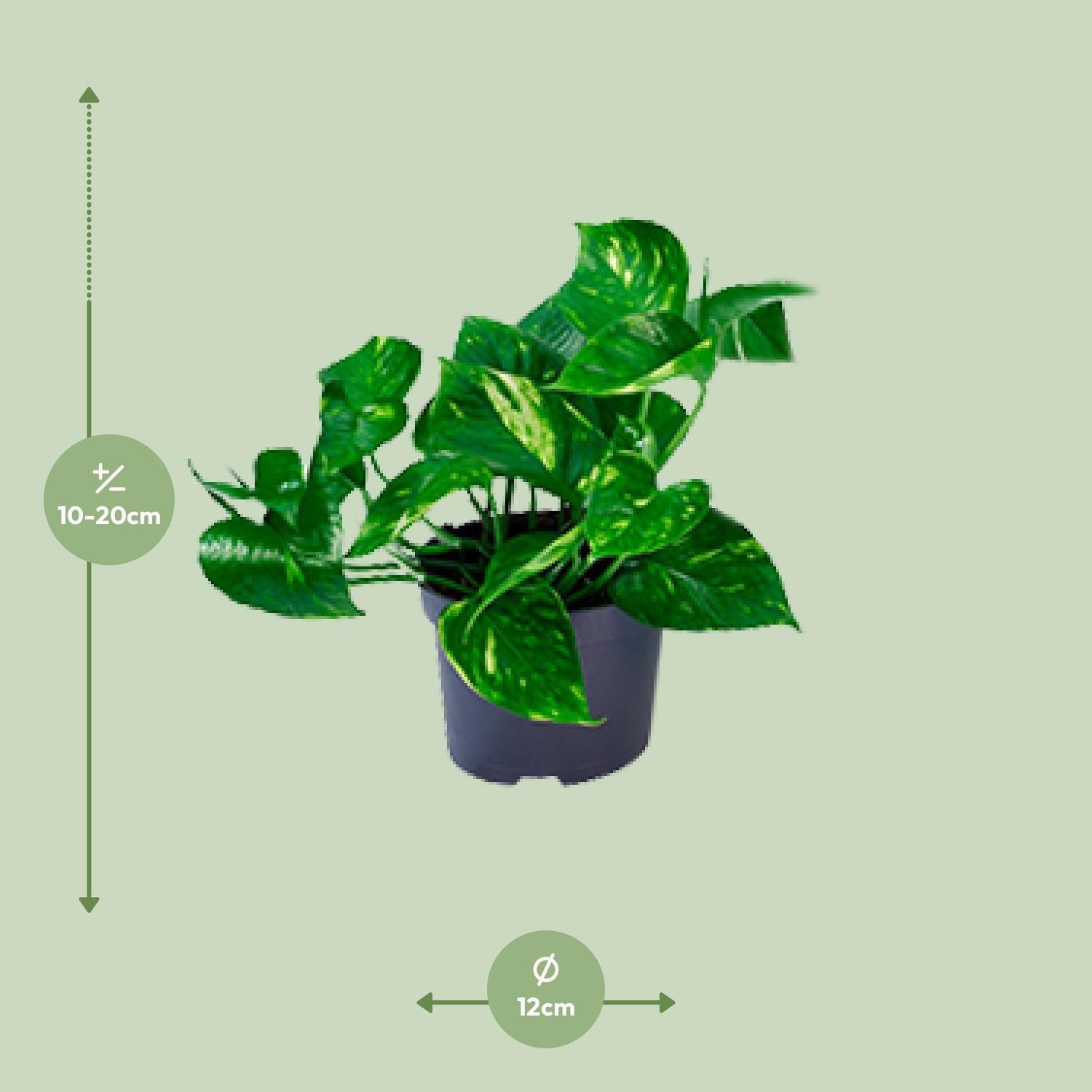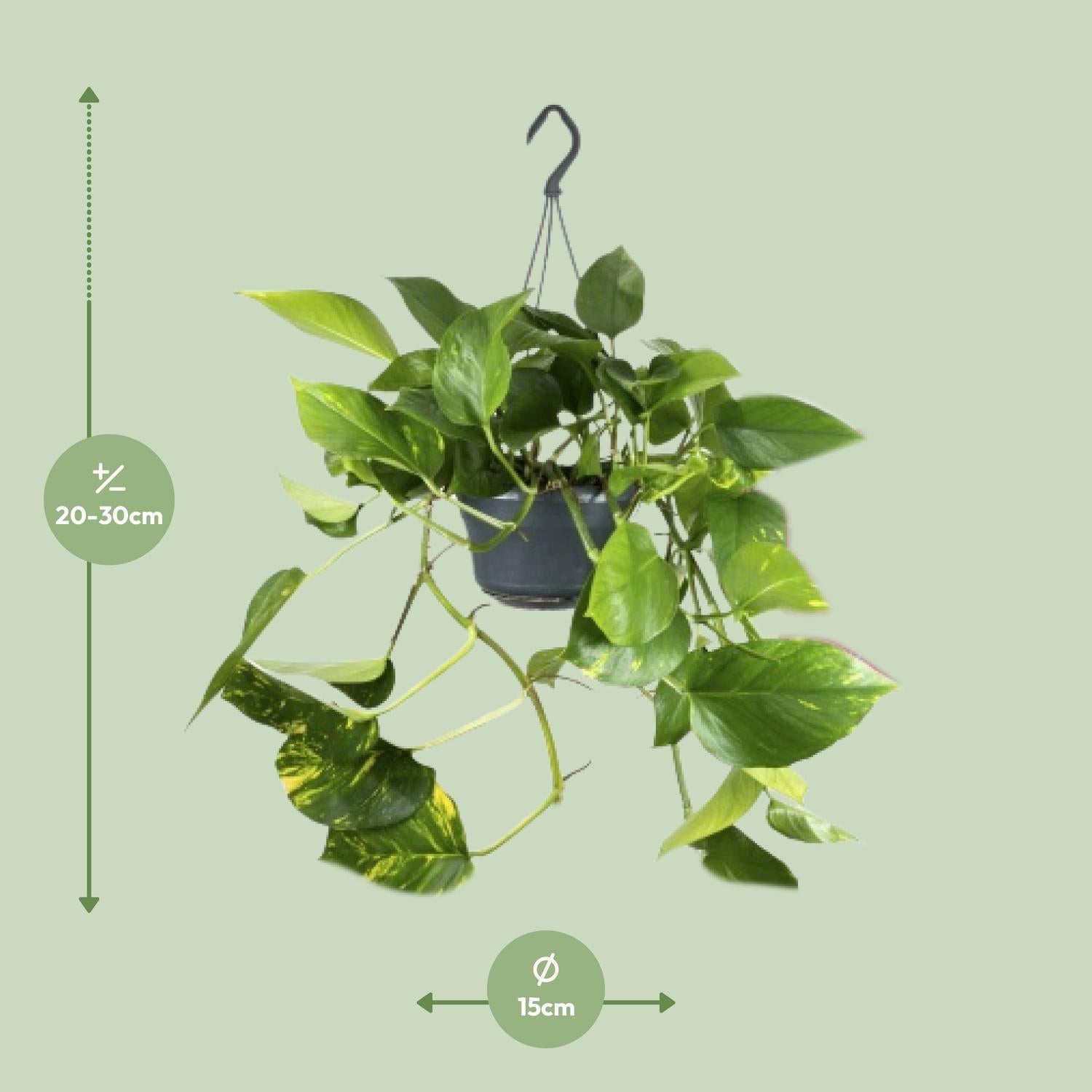


















































The Golden Pothos is arguably the most rewarding houseplant for any home. With its heart-shaped leaves and characteristic yellow-golden variegation, the Golden Pothos Epipremnum aureum is not just a visual highlight but also a true survivor. Whether as a hanging plant or climbing a moss pole, it adapts flexibly to your living spaces while highly efficiently purifying the indoor air of pollutants.
Origin & Characteristics
Epipremnum aureum is originally from the Society Islands in French Polynesia. In its tropical homeland, it climbs up giant jungle trees. As a member of the Araceae family, the Epipremnum aureum possesses aerial roots that it uses to hold onto surfaces. It is considered one of the easiest plants to care for globally and is ideal for beginners.
Appearance & Growth
Characteristic features are the glossy, leathery leaves, which exhibit a beautiful golden-yellow variegation. The growth of the Golden Pothos is rapid: with proper care, the vines can reach several meters in length. When grown indoors, it is usually delivered at a starting size of 20 to 25 cm, but it quickly develops into an impressive green cascade.
The ideal Golden Pothos location
Where does Epipremnum aureum grow best?
A bright to semi-shaded spot is optimal. The Golden Pothos location directly influences leaf coloration: the brighter the plant is kept, the more pronounced the golden pattern. Direct midday sun should be avoided, however, as it can burn the leaves. It also tolerates shadier spots, though it will grow more slowly there and generally produce purely green leaves.
Caring for Golden Pothos & watering correctly
When it comes to caring for Golden Pothos, moderation is the secret. Water only when the top layer of soil has noticeably dried out. It absolutely cannot tolerate waterlogging, as this leads to root rot. It survives short dry spells without any issues thanks to its robust leaves. Occasional misting of the leaves with low-lime water promotes vitality and keeps the leaf surfaces free of dust.
Typical problems & solutions
Yellow leaves or brown tips
If your Pothos has yellow leaves, it is usually due to overwatering. Brown, dry leaf tips, on the other hand, indicate low humidity, especially during the heating season in winter. Changing the location or regular misting will help here.
Natural support for plant health
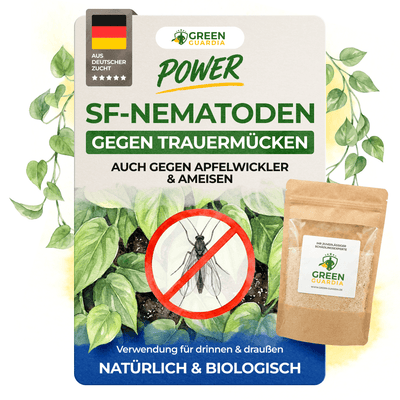
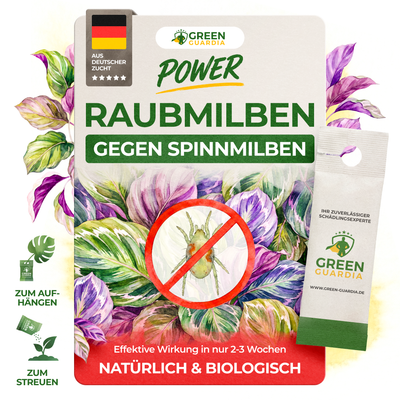
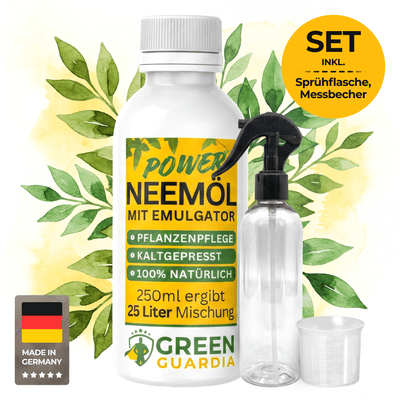
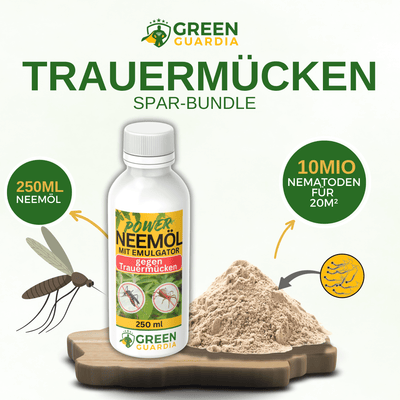
Although the plant is very resilient, pests like spider mites can occasionally appear when the plant is stressed. Neem oil has proven effective for strengthening overall plant health and as a supportive care measure. It naturally conditions the glossy surfaces of your Golden Pothos and helps it maintain its vitality against external influences.
Propagation
Nothing is easier than propagating Epipremnum! Simply cut off a vine with at least one dormant bud (a small brown bump on the stem) and place it in a glass of water. Roots will form within a few days, and you can then pot your new plant.
FAQ about Golden Pothos
Is the Golden Pothos toxic to pets?
Yes, Epipremnum aureum contains calcium oxalate crystals and is toxic to cats and dogs. It should therefore be placed out of reach of pets, preferably hanging in a planter.
How often should you fertilize Pothos?
During the growth phase from March to October, an application of liquid fertilizer every two to four weeks is sufficient. In winter, the plant does not require any additional fertilizer.
Can Pothos also grow in hydroponics?
Absolutely! Golden Pothos is excellent for hydroponics or even for long-term keeping in a vase with water, as long as the nutrient supply is adequate.
Take action now: Get the effortless jungle look
The Golden Pothos is the perfect choice if you are looking for an easy-care, fast-growing, and air-purifying plant. It forgives almost any mistake and rewards you with lush greenery. Would you like to decorate your rooms with this classic? Discover our high-quality Golden Pothos Epipremnum aureum now and start your urban jungle project today!
🍃 Pro tip: If your Pothos gets vines that are too long, you can simply prune them back. This encourages bushier branching at the base and creates a denser appearance.